

Programma Pianoleerlingenconcert "Impressionisme"
Welkom bij ons Pianoleerlingenconcert 2024! Vanavond zullen onze spelers u meenemen op een reis door de wereld van het Frans Impressionisme.
Vertaling naar het Nederlands volgt spoedig
Impressionistische Schilders en Beeldhouwers
Impressionism, originating in the late 19th and early 20th centuries, is an artistic movement that sought to capture the essence and atmosphere of a moment rather than detailed realism.
Impressionist painters like Claude Monet, Edgar Degas, and Pierre-Auguste Renoir revolutionized art by focusing on the play of light and color, often capturing scenes of everyday life. Rather than striving for photographic precision, they aimed to convey the fleeting effects of light and atmosphere, creating a sense of immediacy and movement. This approach was initially met with resistance, but eventually, it profoundly influenced not only the visual arts but also music and literature.
Impressionistische Muziek & Componisten
In music, impressionism is characterized by its use of innovative harmonies, often containing dissonant intervals like major 7ths, and evocative melodies creating a sense of mood and color.
I would say that the multitude of dissonant intervals and chords can be seen as the many colour hues used by the painters.
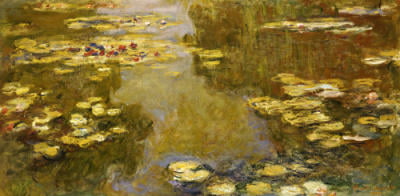
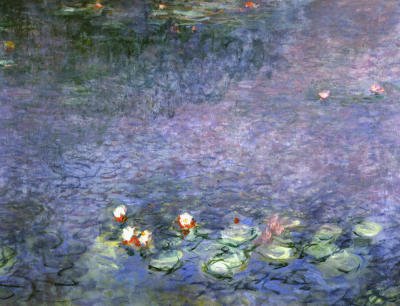
For example, Monet’s series of water lily paintings are renowned for their ability to evoke the changing light and seasons, a quality mirrored in Debussy’s musical compositions. The use of vibrant, unblended colors and visible brushstrokes in impressionist paintings parallels the innovative harmonic structures and textures found in Impressionist music.
Composers like Claude Debussy and Maurice Ravel led this impressionist era of music, drawing inspiration from nature, poetry, and visual art to craft pieces that evoke vivid imagery and emotion.
Friendships and influences between impressionist composers, painters and sculptors
An interesting facet of Impressionism is the close friendships and mutual influences between Impressionist painters and composers. Claude Debussy, for example, was friends with several impressionist painters, including Claude Monet. Their mutual admiration and shared sensibilities allowed them to inspire each other’s work. Debussy’s music often mirrors the delicate play of light and shadow found in Monet’s paintings
Tonight, you will hear pieces inspired by impressionist painters, blending the worlds of music and visual art.
My talented students have been working very hard to bring you these enchanting sounds and dreamy moods.
Enjoy the performance!
Program Piano Student Concert "Impressionism"
Julia
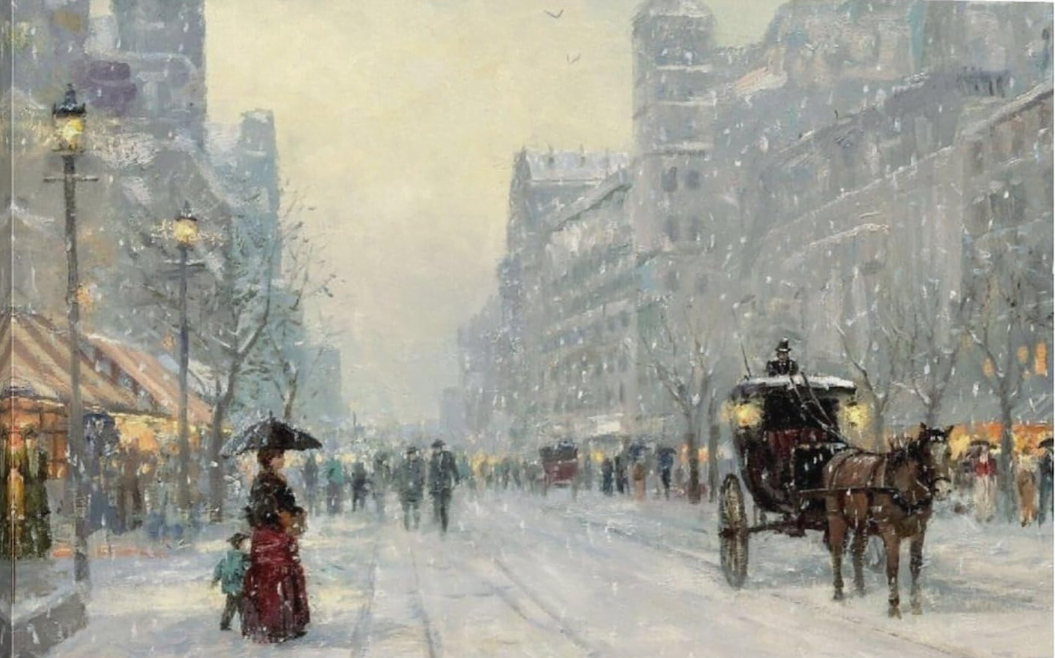
Falling Snowflakes - Melanie Spanswick
Falling Snowflakes is a tale of two halves. The first bars consist of a wistful, slightly poignant melody – accompanied by seventh chords (very impressionist-like). The second halve employs a similar hramonic structure to the opening, but with quaver figurations representing the falling of snowflakes. As an accompanying painting I chose Pierre Auguste Renoir’s painting “”l’Hiver“:
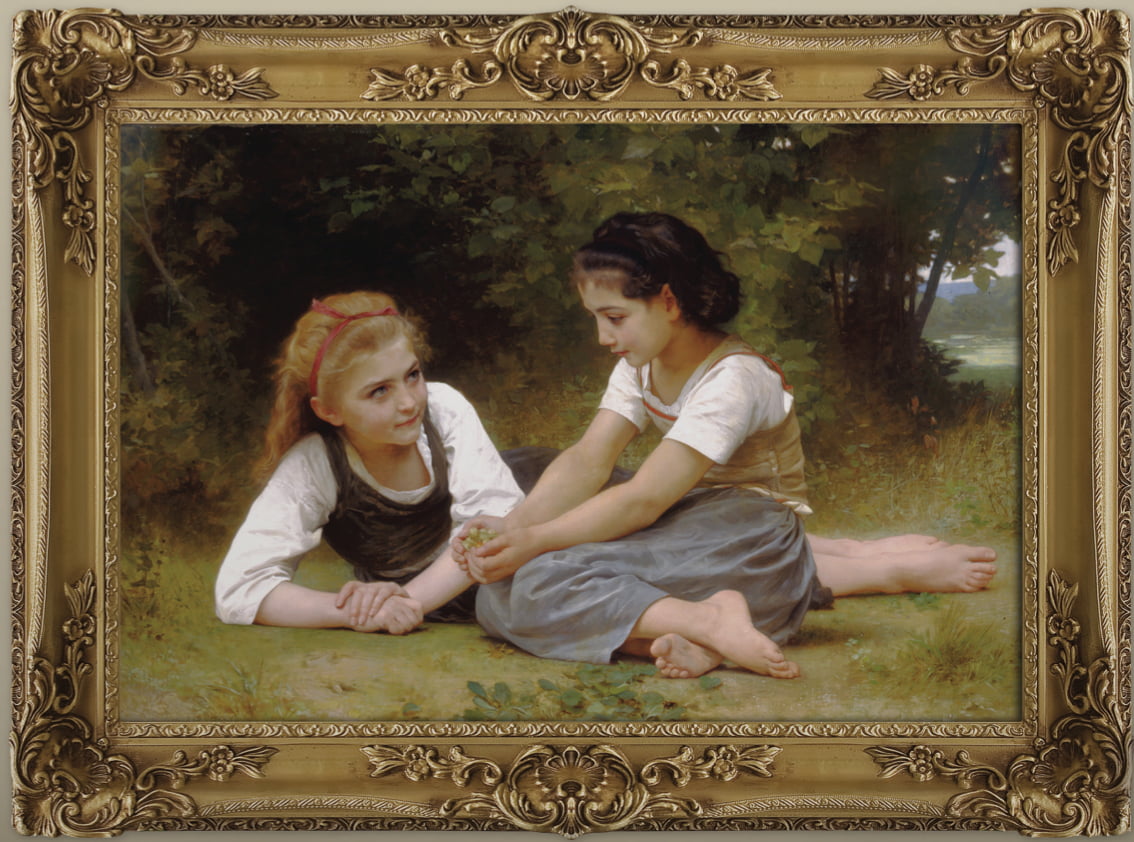
The Nut Gatherers - Catherine Rollins from "Museum Masterpieces"
Painting from the collection of The Detroit Institute of Arts, composition by Catherine Rollins
The artist, William-Adolphe Bouguereau (1825–1905) was a highly regarded French academic artist whose work lost favor as the Impressionist painters became popular. This painting from 1882 captures his gift for refinement and beauty, as does the elegant, dreamy piece Catherine Rollins created about it.
Moonlight Sonata (Piano Sonata No. 14 in C-sharp minor, Op. 27, No. 2) in D minor ~ Ludwig von Beethoven
“Moonlight Sonata” is not an impressionist piece. But although it is a piece from the Classical period with early Romantic elements, it does have a romantic feeling and it is notable for its unconventional structure. Unlike most classical sonatas, which typically begin with a fast movement, the “Moonlight Sonata” starts with a slow and hauntingly beautiful Adagio sostenuto. This is followed by a more lively Allegretto and then culminates in a dramatic and intense Presto agitato. This structure adds to the piece’s unique and evocative character.
Fay
Clair de Lune- 3rd Movement Suite Bergamasque by Claude Debussy
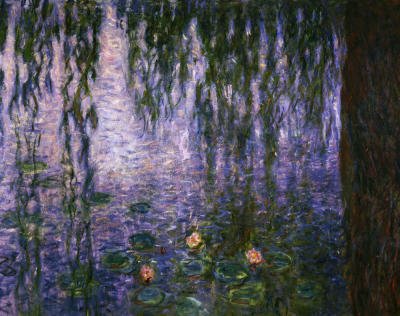
“Clair de Lune” is a piano piece by Claude Debussy, composed in 1890 and published in 1905, as the third movement of his Suite Bergamasque. It evokes the serene atmosphere of moonlit nights through its rich harmonies and fluid, impressionistic style. Debussy was a good friend of Claude Monet, and is it thought of that “Clair de Lune” can be evoked by a walk in Monet’s Garden at night.
Claude Monet sought to depict the play of light, color, and atmosphere in their scenes, often focusing on natural landscapes and everyday moments bathed in natural light. His garden was his treasure and joy, with beautiful willow trees hanging over the pond filled with lilies.
Debussy, aimed to achieve a similar effect in Clair de Lune—capturing the moods that you feel when you walk through Monet’s garden, and what you feel, like the soft evening breeze on your skin, the smell of the Jasmin in summer, and the call of a night owl. The piece remains beloved for its gentle, reflective mood and is a famous example of Debussy’s innovative approach to music.
Misty - Erroll Garner (1954)
“The song “Misty” is a jazz standard composed by Erroll Garner in 1954, with lyrics by Johnny Burke added later. It is made famous by many singers, especially by Ella Fitzgerald. As impressionist painters and composers, jazz composers also try to create an atmosphere that is more important than the straightforward, mechanical pieces of the classical era. Like impressionist composers, there is a lot of use of the sevenths, which give an atmosphere you don’t hear a lot in pop musical and mainstream classical music. So Impressonist and jazz composers have a lot in common!
l'Étoile
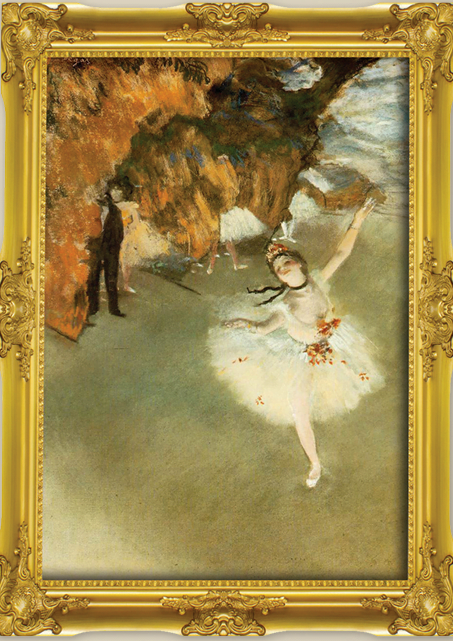
Painting: Claude Monet, composition: Catherine Rollins
“L’Étoile” by Edgar Degas is a painting about a young ballerina. It showcases one of his favorite themes—the world of ballet dancers and their performances. In this painting, Degas captures a moment on stage where a ballerina, possibly the star performer (“l’étoile” in French), is in mid-performance.
While Degas is often associated with the impressionist movement due to his use of spontaneous brushwork and interest in capturing light and movement, he considered himself a Realist. However, his approach to depicting modern life and everyday scenes aligns closely with the aims of the Impressionists, even though his technique and subject matter differed slightly.
My friend Catherine Rollins from the USA composed a lovely theme on it.
Jacky
Visiting Home by RADWIMPS
“Visiting Home” (帰りたくなったよ, Kaeritakunatta yo) by RADWIMPS is a poignant song that explores themes of nostalgia, longing and the passage of time. It is part of the soundtrack for the animated film “Your Name” (Kimi no Na wa), which was released in 2016 and became a cultural phenomenon in Japan and worldwide.
The song’s lyrics convey a deep sense of nostalgia for home and childhood memories. It reflects on the emotional pull of returning to one’s roots, to a place that holds significance and where cherished memories were made.
The song explores the emotional journey of realizing the value of home and longing to revisit it, even if physically distant or changed over time. It captures the bittersweet feeling of reminiscing about the past while facing the present.
Connection to “Your Name”: In the context of the film “Your Name,” “Visiting Home” plays a crucial role in underscoring the themes of love, identity, and connection across time and space.
Listen to “Visiting Home” here
Nocturne - Chopin
Fréderic Chopin’s Nocturne is not an impressionist piece officially, but just as “Moonlight Sonata”, it creates an impressionist atmosphere, albeit in a quiet, romantic waltz-rythm.
Juri
One Summer’s Day - Joe Hisaishi
One Summer’s Day” (あの夏へ, Ano Natsu e) is a musical piece composed by Joe Hisaishi, and it is prominently featured in the animated film “Spirited Away” (千と千尋の神隠し, Sen to Chihiro no Kamikakushi). “Spirited Away” is a critically acclaimed Japanese animated fantasy film directed by Hayao Miyazaki and produced by Studio Ghibli.
The film follows the story of a young girl named Chihiro who becomes trapped in a mysterious and magical world after her parents undergo a transformation into pigs. Chihiro must navigate this spirit realm and work at a bathhouse run by a witch named Yubaba in order to rescue her parents and find her way back home.
“One Summer’s Day” by Joe Hisaishi:
Musical Theme: “One Summer’s Day” serves as the main theme for “Spirited Away” and plays a significant role in setting the film’s emotional tone. It is a melodic and evocative piece that captures both the nostalgia of childhood and the sense of wonder and discovery inherent in the film’s fantastical world.
Cultural Impact: Joe Hisaishi’s score for “Spirited Away,” including “One Summer’s Day,” has received widespread acclaim for its ability to enhance the film’s narrative and emotional depth. The music contributes to the magical atmosphere of the story and has become synonymous with the film’s iconic status in the world of animation.
Gymnopédie No.1 ~ Eric Satie
“Gymnopédie No. 1” by Erik Satie is often considered impressionistic due to several musical characteristics that align with the aesthetics of Impressionist music, despite Satie himself not identifying as an Impressionist. Here are some reasons why “Gymnopédie No. 1” is associated with Impressionism:
Harmony and Texture: Satie’s use of harmonies in “Gymnopédie No. 1” is characterized by its gentle, ambiguous chords and sparse texture. This harmonic language, with its use of unresolved chords and floating tonalities, creates a sense of ethereal and atmospheric quality reminiscent of Impressionist painters’ treatment of light and color.
Mood and Atmosphere: The piece evokes a dreamlike and introspective mood, much like the way Impressionist painters sought to capture fleeting moments and subtle emotions in their works. The repetitive and hypnotic nature of the melody adds to the contemplative and tranquil atmosphere.
Lack of Traditional Form: “Gymnopédie No. 1” deviates from traditional classical forms and structures. It unfolds slowly and evokes a sense of timelessness, focusing more on mood and evocation rather than thematic development or dramatic contrast, which is a hallmark of Impressionist music.
Influence on Debussy: Erik Satie’s compositions, including the Gymnopédies, were influential on Claude Debussy, a key figure in the Impressionist movement in music. Debussy admired Satie’s use of unconventional harmonies and his ability to create atmospheric pieces that appealed to the senses rather than the intellect.
While Erik Satie himself did not align with any particular musical movement and preferred to be seen as an individualist, the characteristics of “Gymnopédie No. 1” align closely with the Impressionist ideals of capturing fleeting sensations, creating mood through harmony and texture, and challenging traditional forms. Therefore, despite Satie’s own stance, his Gymnopédies, including the first one, are often considered part of the broader Impressionist musical landscape.
Song of Storms - Koji Kondo
The Song of Storms is a piece from the game “The Legend of Zelda: Ocarina of Time.
It was composed by Koji Kondo, who is renowned for creating the iconic music for many games in the Zelda series as well as other Nintendo franchises.
“Ocarina of Time” is a critically acclaimed action-adventure game. Players control the protagonist, Link, as he navigates through various dungeons, solves puzzles, and battles enemies to prevent the evil Ganondorf from obtaining the Triforce and taking over the kingdom of Hyrule.
Music plays a central role in the game, with Link using an ocarina to perform various melodies that have magical effects, such as changing the weather, opening doors, and teleporting. The “Song of Storms” is one such melody that Link learns and uses during his quest.
“Song of Storms”:
In the game’s storyline, the “Song of Storms” is used to manipulate the weather, specifically to summon rain or to dispel curses related to weather elements.
The “Song of Storms” has become one of the most recognizable and beloved pieces of video game music, known for its catchy melody and magical, mystical atmosphere.
Ballade Pour Adéline - Paul de Senneville
“Ballade pour Adeline” (French for “Ballad for Adeline”) is a 1977 instrumental by Richard Clayderman, composed by Paul de Senneville. He composed the piece as a tribute to his newborn daughter, Adeline. As of 2020, worldwide sales of the recording have reached 22 million copies in 38 countries.
Anna
Sur le Pont D’Avignon ~Alfred’s
Fréderic Chopin’s Nocturne is not an impressionist piece officially, but just as “Moonlight Sonata”, it creates an impressionist atmosphere, albeit in a quiet, romantic waltz-rythm.
In Galop ~Alfred’s
“In Galop” is a variation on the
Collin
Sarasponda ~Alfred’s
Fréderic Chopin’s Nocturne is not an impressionist piece officially, but just as “Moonlight Sonata”, it creates an impressionist atmosphere, albeit in a quiet, romantic waltz-rythm.
Acrobaten - John Thompson
Fréderic Chopin’s Nocturne is not an impressionist piece officially, but just as “Moonlight Sonata”, it creates an impressionist atmosphere, albeit in a quiet, romantic waltz-rythm.
Aditri
Le Can Can ~Alfred’s
Fréderic Chopin’s Nocturne is not an impressionist piece officially, but just as “Moonlight Sonata”, it creates an impressionist atmosphere, albeit in a quiet, romantic waltz-rythm.
L’A.B.C. Du Quatre-Mains No 12
Fréderic Chopin’s Nocturne is not an impressionist piece officially, but just as “Moonlight Sonata”, it creates an impressionist atmosphere, albeit in a quiet, romantic waltz-rythm.
Peasant Dance - John Thompson
Fréderic Chopin’s Nocturne is not an impressionist piece officially, but just as “Moonlight Sonata”, it creates an impressionist atmosphere, albeit in a quiet, romantic waltz-rythm.
Olivia
The Dancing Bear - John Thompson
Fréderic Chopin’s Nocturne is not an impressionist piece officially, but just as “Moonlight Sonata”, it creates an impressionist atmosphere, albeit in a quiet, romantic waltz-rythm.
When the Saints Go Marching In ~ New Orleans Standard
Fréderic Chopin’s Nocturne is not an impressionist piece officially, but just as “Moonlight Sonata”, it creates an impressionist atmosphere, albeit in a quiet, romantic waltz-rythm.
Dromenland ~John Thompson (quatre-mains)
Fréderic Chopin’s Nocturne is not an impressionist piece officially, but just as “Moonlight Sonata”, it creates an impressionist atmosphere, albeit in a quiet, romantic waltz-rythm.
Emma
Alouette
Fréderic Chopin’s Nocturne is not an impressionist piece officially, but just as “Moonlight Sonata”, it creates an impressionist atmosphere, albeit in a quiet, romantic waltz-rythm.
Blue Lavender
Fréderic Chopin’s Nocturne is not an impressionist piece officially, but just as “Moonlight Sonata”, it creates an impressionist atmosphere, albeit in a quiet, romantic waltz-rythm.
The Band Plays On - John Thompson
Fréderic Chopin’s Nocturne is not an impressionist piece officially, but just as “Moonlight Sonata”, it creates an impressionist atmosphere, albeit in a quiet, romantic waltz-rythm.
Prélude Op. 28, No. 20 in A mineur ~ Chopin (quatre-mains)
Fréderic Chopin’s Nocturne is not an impressionist piece officially, but just as “Moonlight Sonata”, it creates an impressionist atmosphere, albeit in a quiet, romantic waltz-rythm.
Karolina
Princess Waltz ~John Thompson
A waltz for a true princess, our Karolina! We play it in quatre-mains for you.
Down A River (quatre-mains) ~John Thompson
Another quatre-mains song, is this song by John Thompsons. Enjoy!
Ayana
Fairy Land ~John Thompson
“Fairy Land” by John Thompson is a dreamy song with arpeggio’s. The word “arpeggio” means harp in Italian, and by playing chords this way, and octaving the melody, we are brought to a land where no worries exist.
Sophie
The Church Bells Ring ~ John Thompson
The Netherlands is known for its'”carillons”. These church bells, played by a beiaardier, can play the melody of any song and can be heard all across town.
Indian Song ~ Alfred's
Why not play a not-so-impressionist piece, just because everyone loves this song!
The Rainbow ~ Alfred's
When you listen to this song, you hear the sun come up and see a beautiful rainbow in the sky. The “fermata” lets us take a break. Wasn’t it Mozart who said that “The music is not in the notes, but in the silence between”?
L’A.B.C. Du Quatre-Mains No. 10
We end this concert by Sophie and me playing everyone’s favourite quatre-mains song!
We hope you enjoyed it!